1
Downloads

Even years later, the film’s "shattering" twist remains one of the most discussed endings in film history, serving as a mathematical proof that, in the words of the film, "one plus one can equal one."
While the 2010 film brought the story to a massive audience, its roots lie in Wajdi Mouawad’s 2003 play. According to Wikipedia , the play was based on the real-life experiences of Lebanese militant Souha Bechara. While the film grounded the story in a gritty, realistic aesthetic, the original stage production relied more on abstract symbolism to convey the same "scorched" emotional landscape. Cinematic Impact and Legacy
The twins must reconcile their comfortable Canadian lives with the brutal realities of their heritage. Incendies -2010-2010
The film illustrates how war transforms victims into perpetrators, questioning whether the cycle can ever truly be broken.
What begins as a standard genealogical search quickly descends into a visceral journey through a landscape scarred by religious and political conflict. Villeneuve expertly weaves two timelines: the twins’ modern-day investigation and Nawal’s tragic past as a political prisoner and activist. Themes of Im/mobility and Trauma Even years later, the film’s "shattering" twist remains
The narrative follows Canadian twins, Simon and Jeanne Marwan, who are left with a shocking task following the death of their mother, Nawal. According to her will, they must travel to her homeland in an unnamed Middle Eastern country—widely understood to be Lebanon during its Civil War —to find the father they thought was dead and the brother they never knew existed.
Incendies is celebrated for its precise cinematography and the haunting use of Radiohead’s "You and Whose Army?" which sets an ominous tone from the opening frames. It was nominated for at the 83rd Academy Awards, cementing its status as a cornerstone of Canadian and international cinema. Cinematic Impact and Legacy The twins must reconcile
As noted in scholarly analysis from Transtexts , the film's main message explores the tension between "mobility and immobility." It contrasts the physical movement of the twins across borders with the emotional and generational "stuckness" caused by trauma. Key thematic pillars include:
Even years later, the film’s "shattering" twist remains one of the most discussed endings in film history, serving as a mathematical proof that, in the words of the film, "one plus one can equal one."
While the 2010 film brought the story to a massive audience, its roots lie in Wajdi Mouawad’s 2003 play. According to Wikipedia , the play was based on the real-life experiences of Lebanese militant Souha Bechara. While the film grounded the story in a gritty, realistic aesthetic, the original stage production relied more on abstract symbolism to convey the same "scorched" emotional landscape. Cinematic Impact and Legacy
The twins must reconcile their comfortable Canadian lives with the brutal realities of their heritage.
The film illustrates how war transforms victims into perpetrators, questioning whether the cycle can ever truly be broken.
What begins as a standard genealogical search quickly descends into a visceral journey through a landscape scarred by religious and political conflict. Villeneuve expertly weaves two timelines: the twins’ modern-day investigation and Nawal’s tragic past as a political prisoner and activist. Themes of Im/mobility and Trauma
The narrative follows Canadian twins, Simon and Jeanne Marwan, who are left with a shocking task following the death of their mother, Nawal. According to her will, they must travel to her homeland in an unnamed Middle Eastern country—widely understood to be Lebanon during its Civil War —to find the father they thought was dead and the brother they never knew existed.
Incendies is celebrated for its precise cinematography and the haunting use of Radiohead’s "You and Whose Army?" which sets an ominous tone from the opening frames. It was nominated for at the 83rd Academy Awards, cementing its status as a cornerstone of Canadian and international cinema.
As noted in scholarly analysis from Transtexts , the film's main message explores the tension between "mobility and immobility." It contrasts the physical movement of the twins across borders with the emotional and generational "stuckness" caused by trauma. Key thematic pillars include:
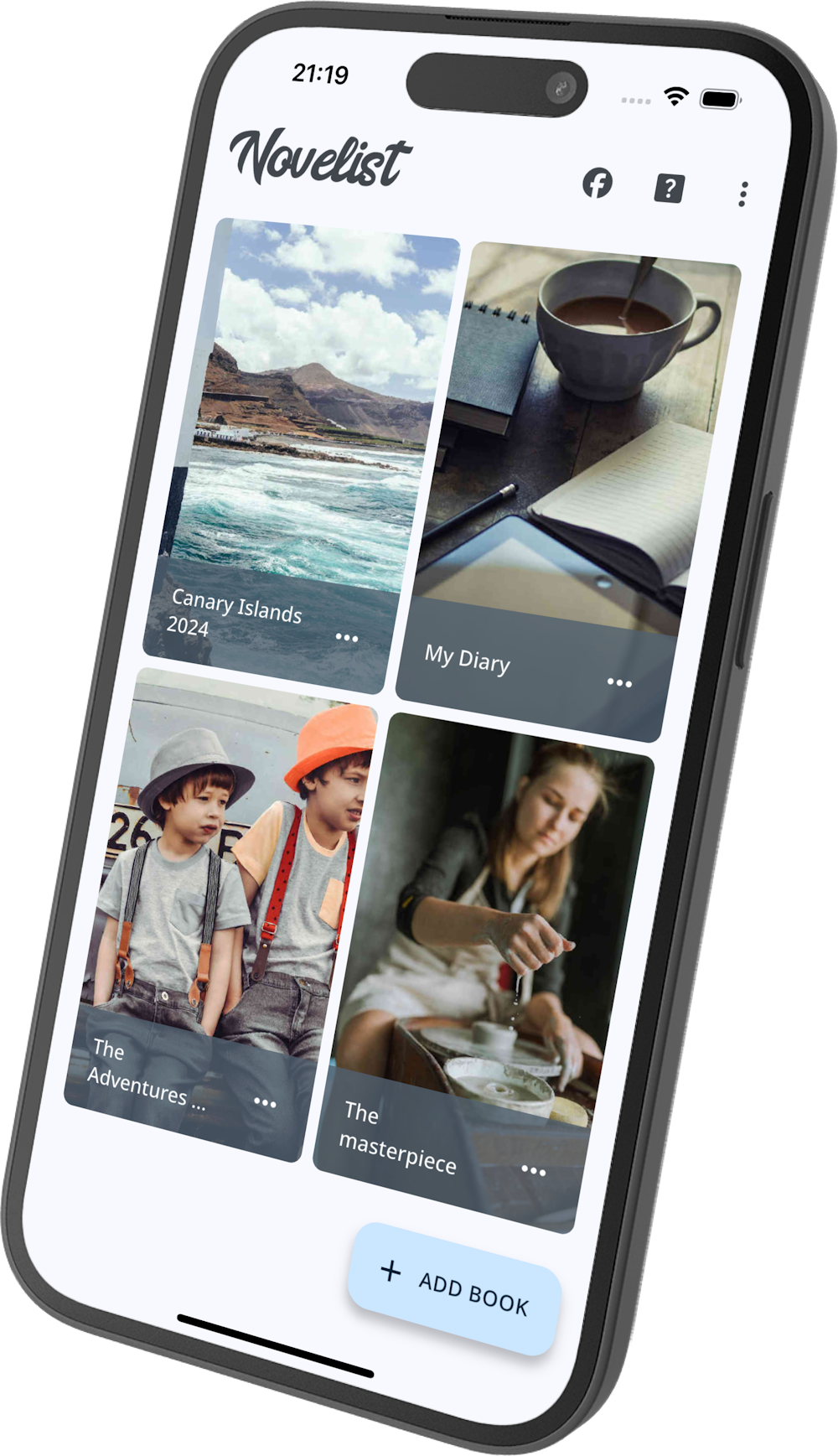
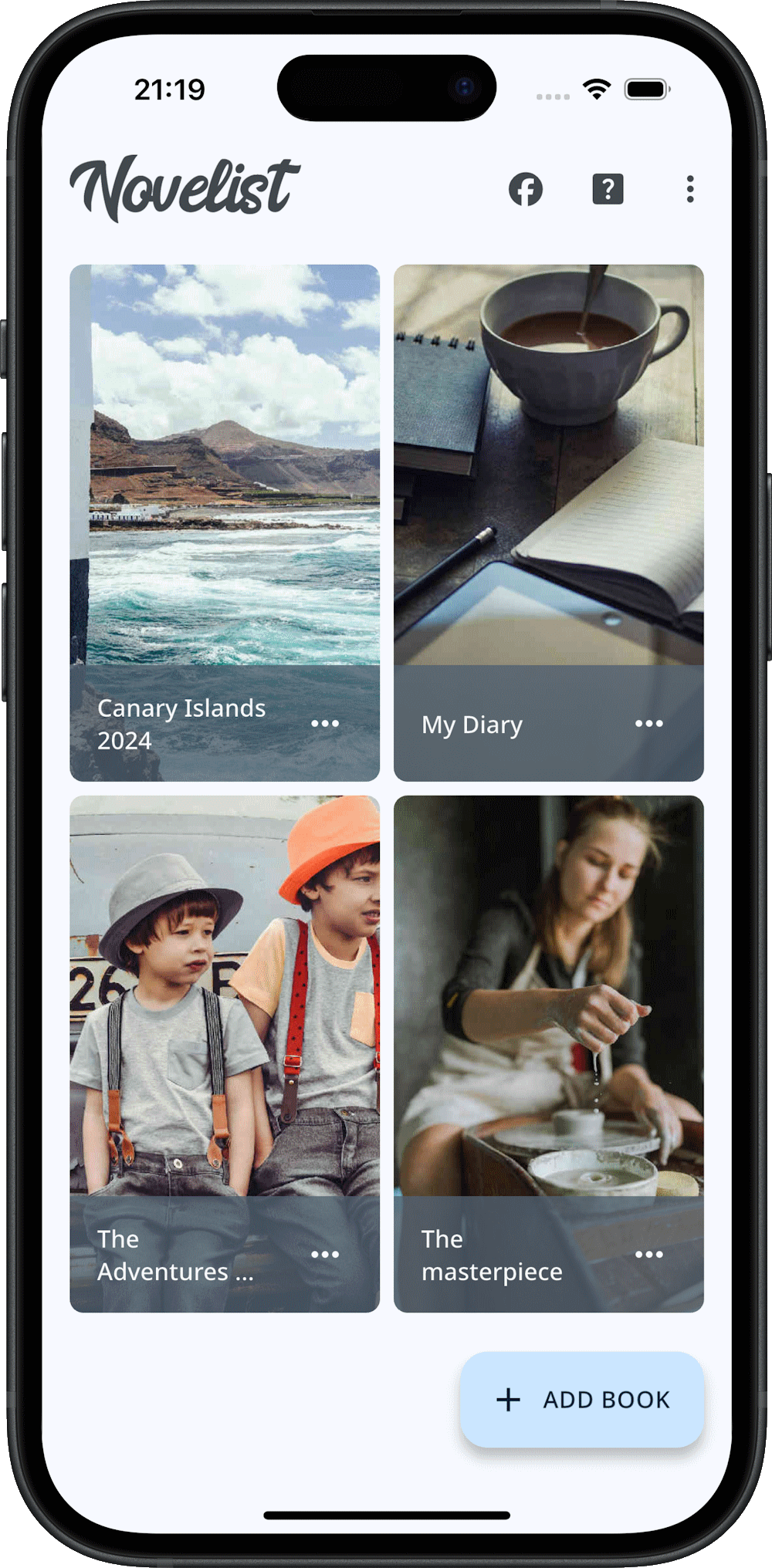
It's very easy to find and install Novelist on your smartphone. Just follow the above link or search in the Android marketplace. Click on Install App and you're done.
Novelist is completely free: no buying costs, in-app purchases or hidden charges. And no ads too, so you can concentrate only on what matters to you: writing!
Novelist sports a complete tutorial and an in-app help section. Non enough? Just use our email or the provided contact form to get in touch, and we'll answer as soon as possible.
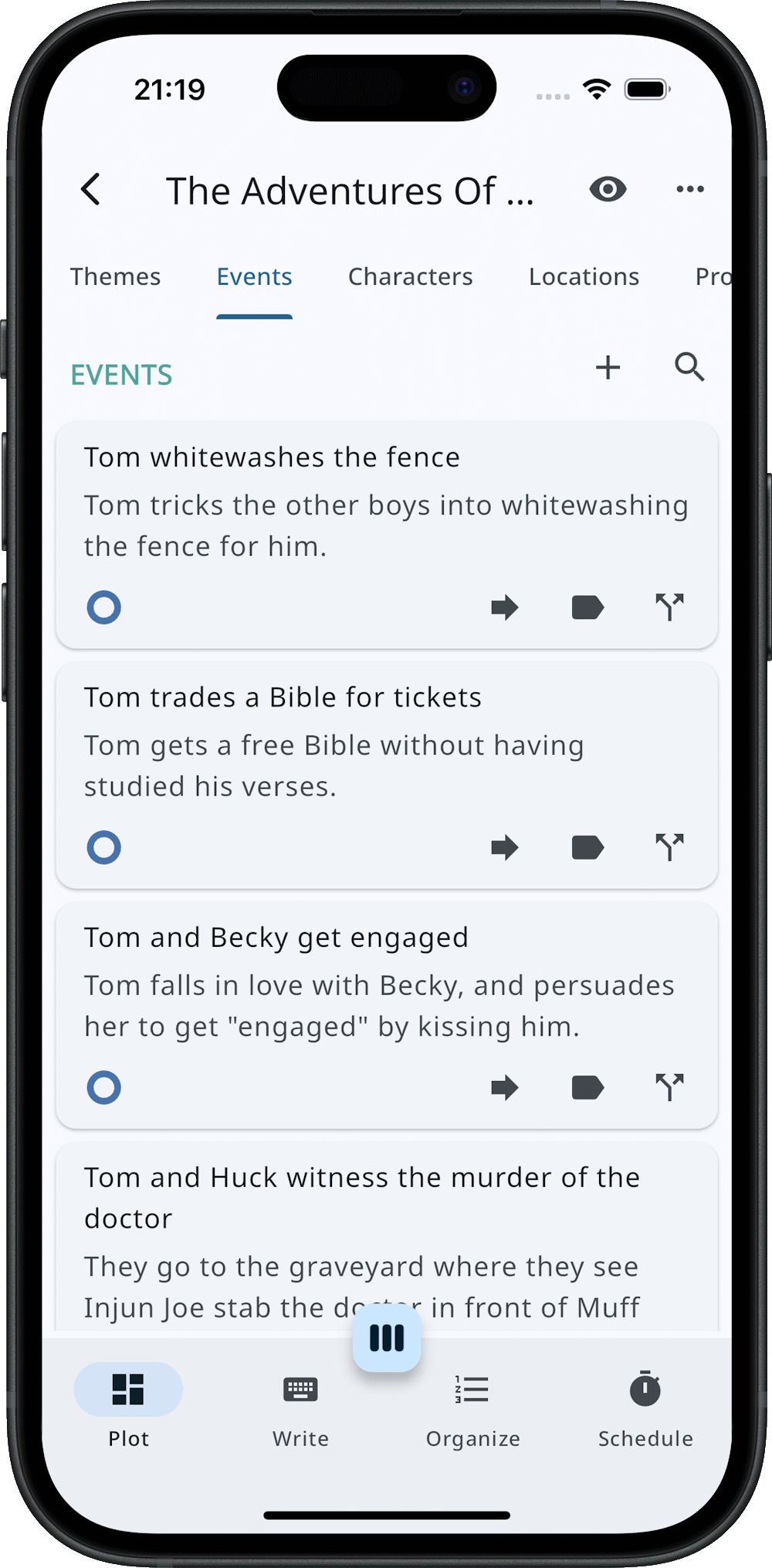
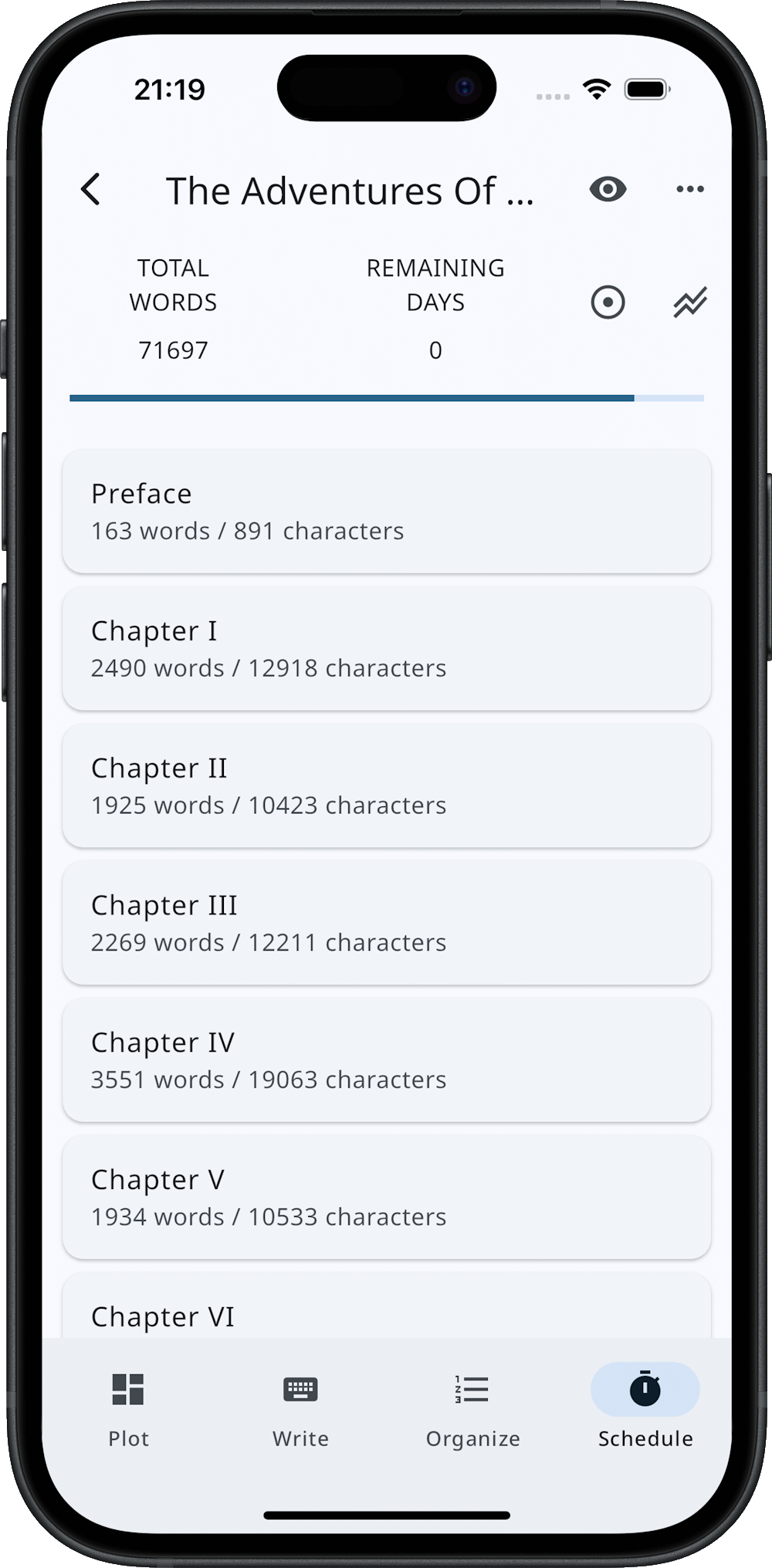
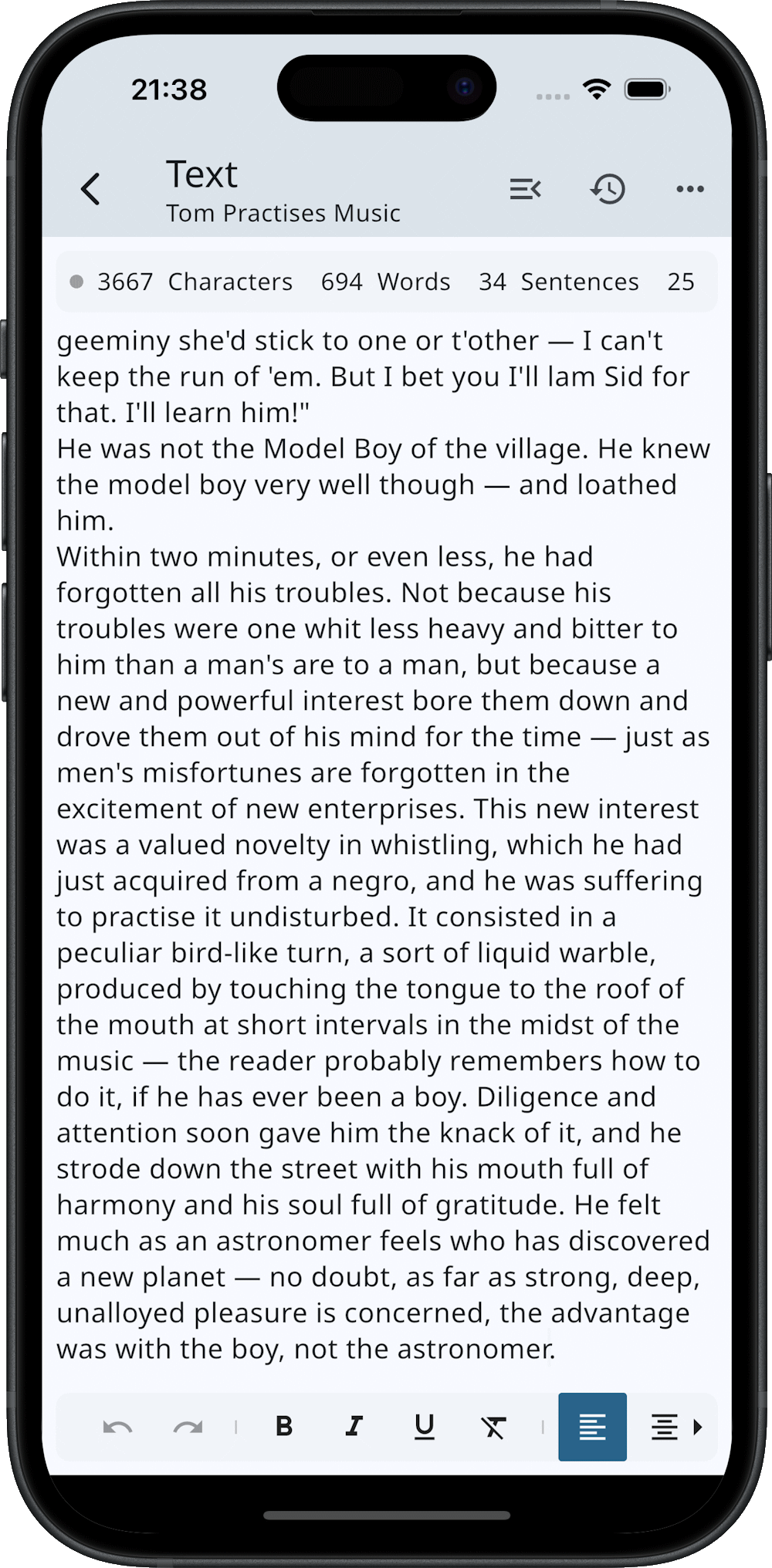
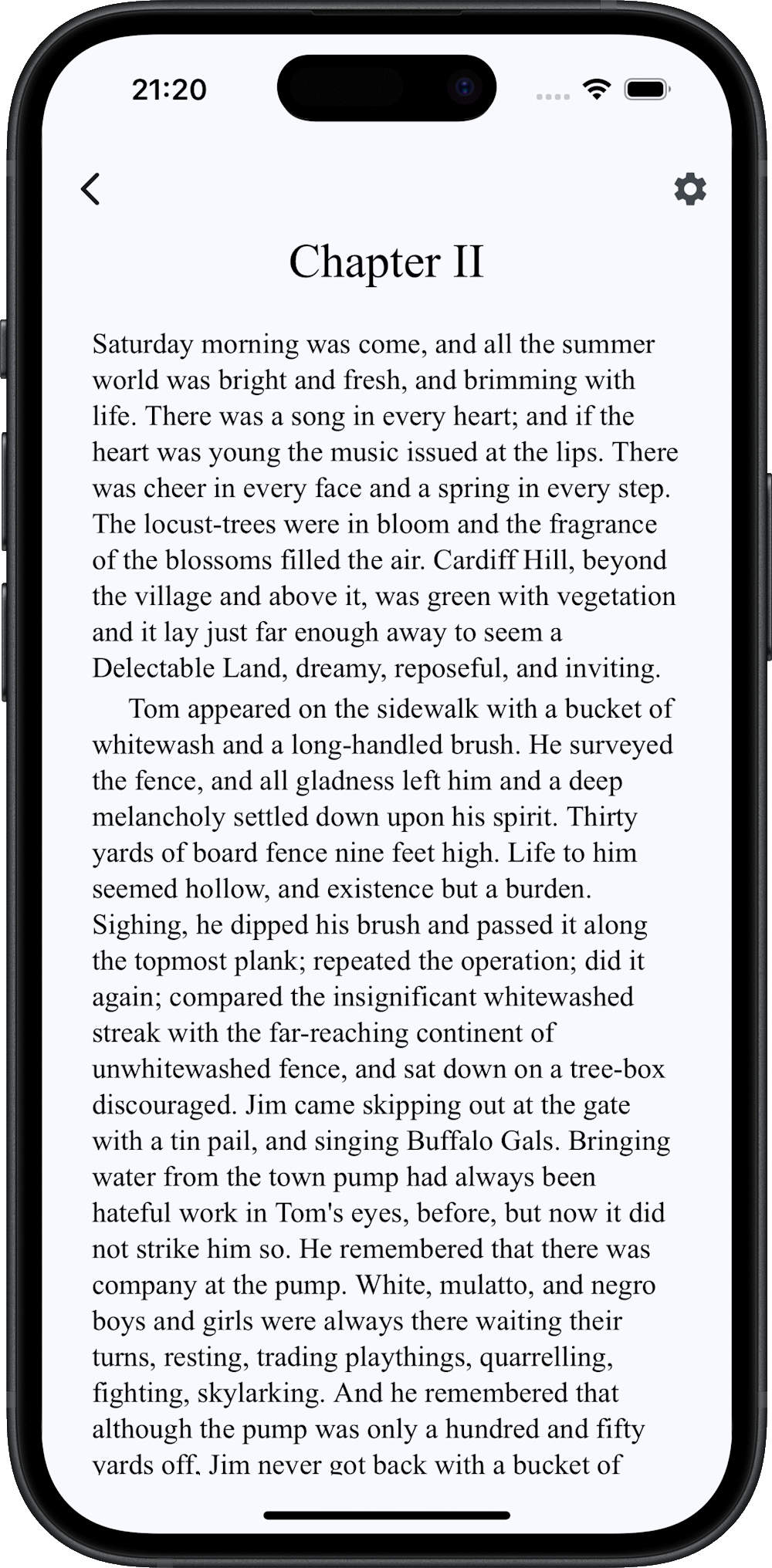
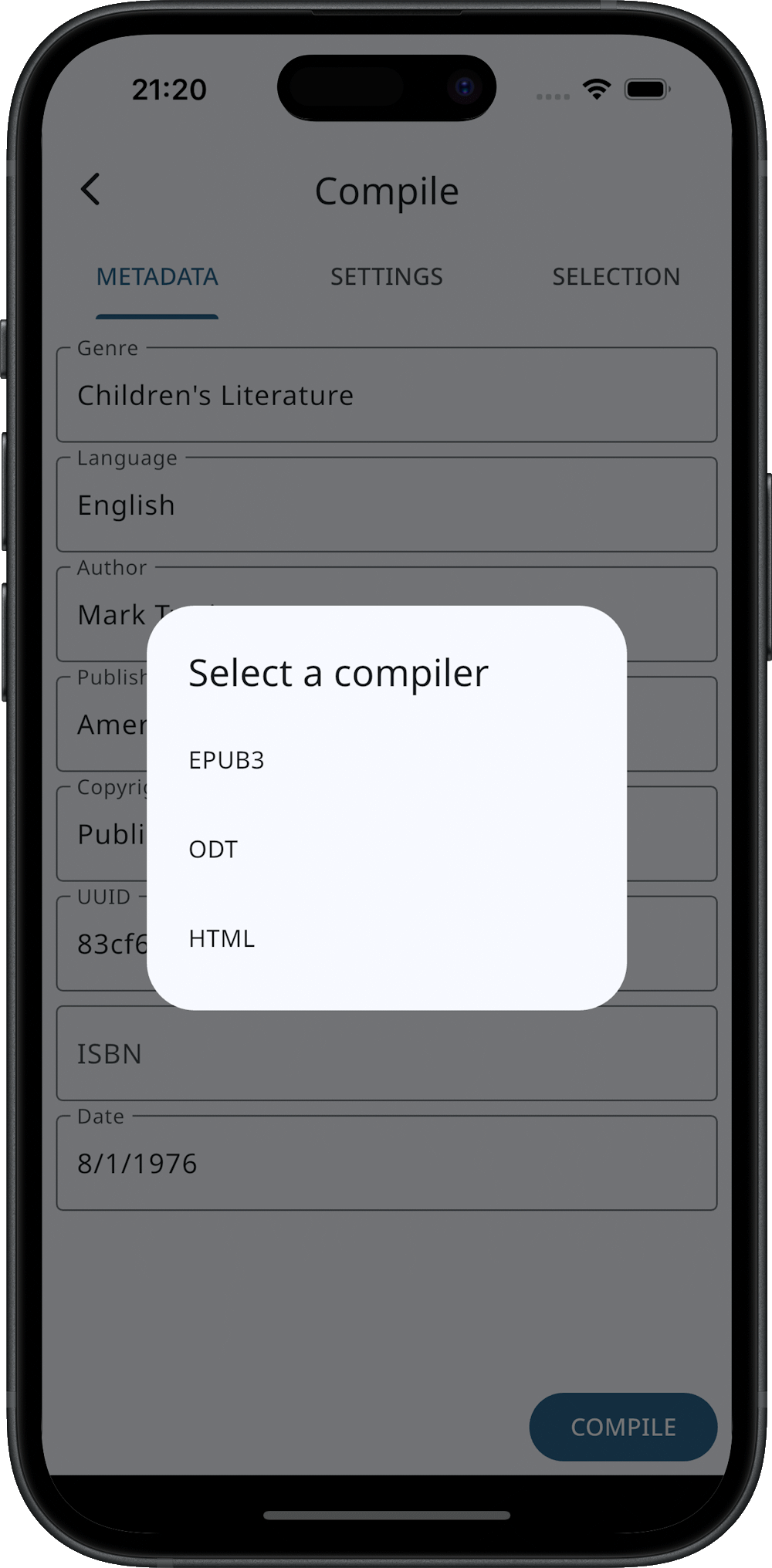
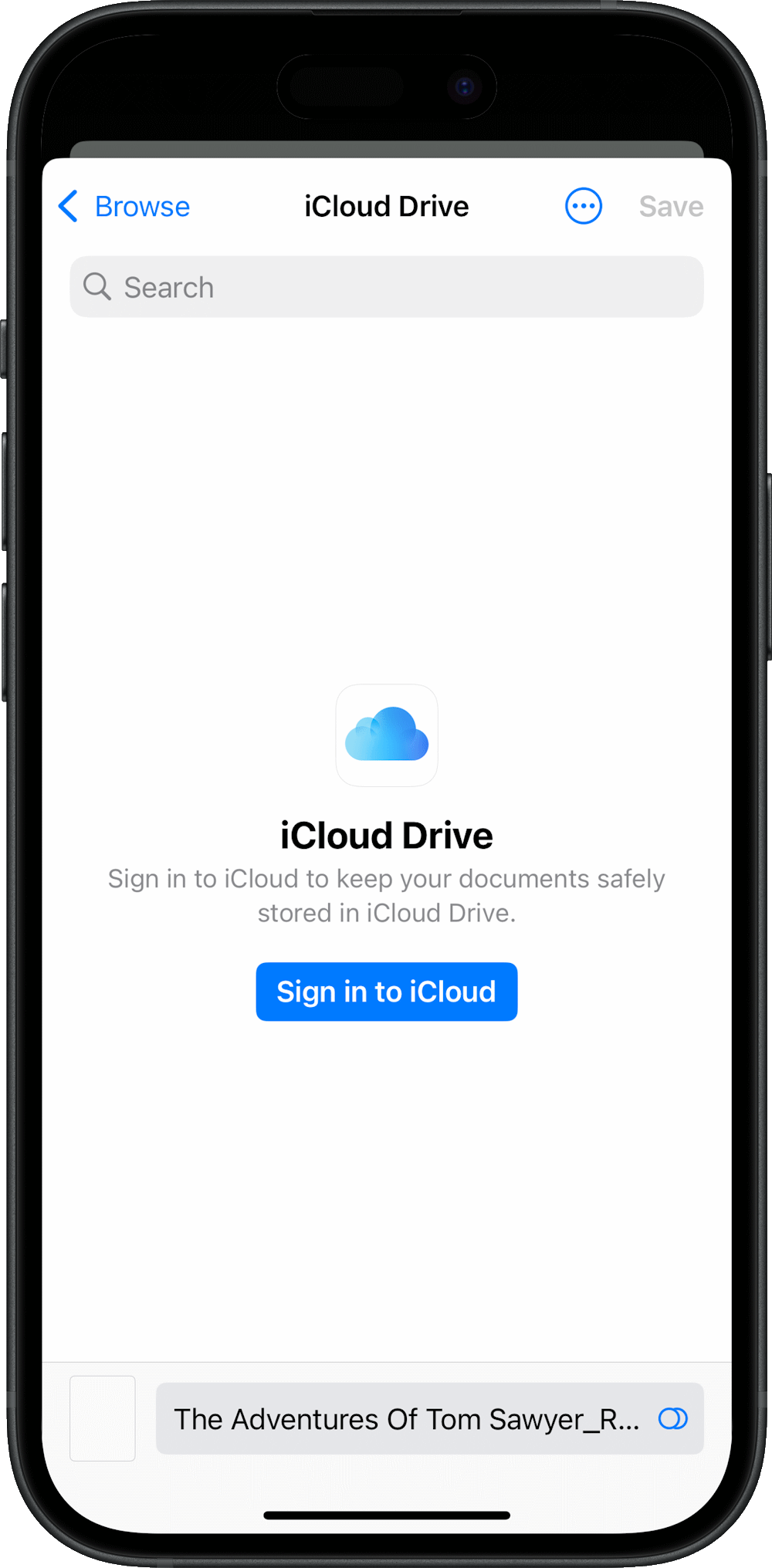
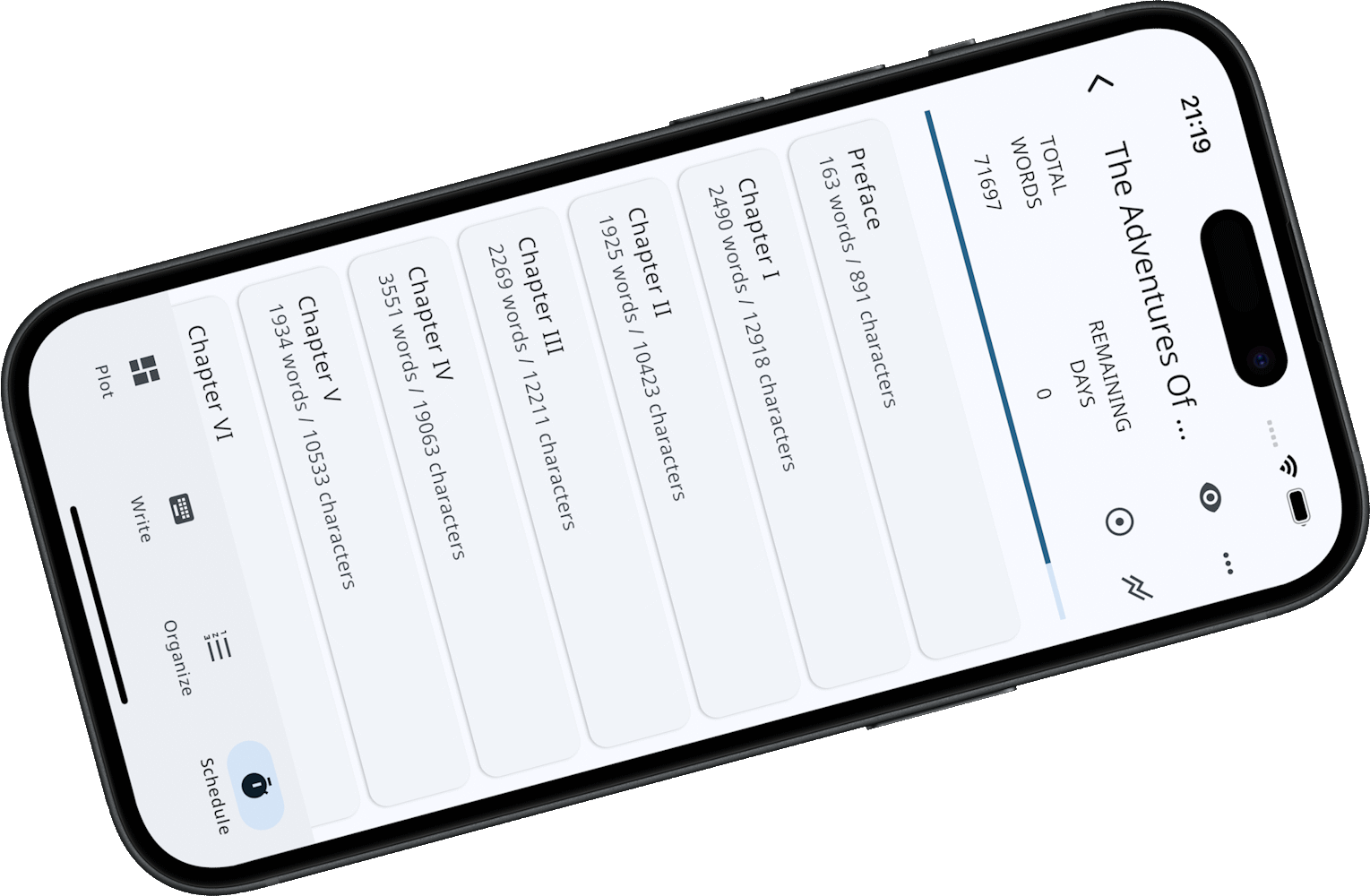
Do you think you'll never be able to finish writing your book? Track your progress and set goals to increase focus on the final result.
How many books can I write with Novelist?
There is no maximum number of books you can write using Novelist. The only limit is your imagination!
Will there ever be a cloud version?
Yes, probably. A web based cloud version is already in development, but there's no timing schedule or pricing information at the moment.
How are the features to be added established?
Every feature is carefully planned and introduced only after extensive testing. If you have feedbacks, suggestions, critics, feature requests or anything else please contact us.
Plot
Plot is when you list all the elements of your story, like on a board. Items can be edited, moved, merged, splitted, reordered and deleted. You can even set a status, write notes and texts or add tags, metadata and pictures to each item. Categories are completely customizable, as are metadata and statuses.
Outline
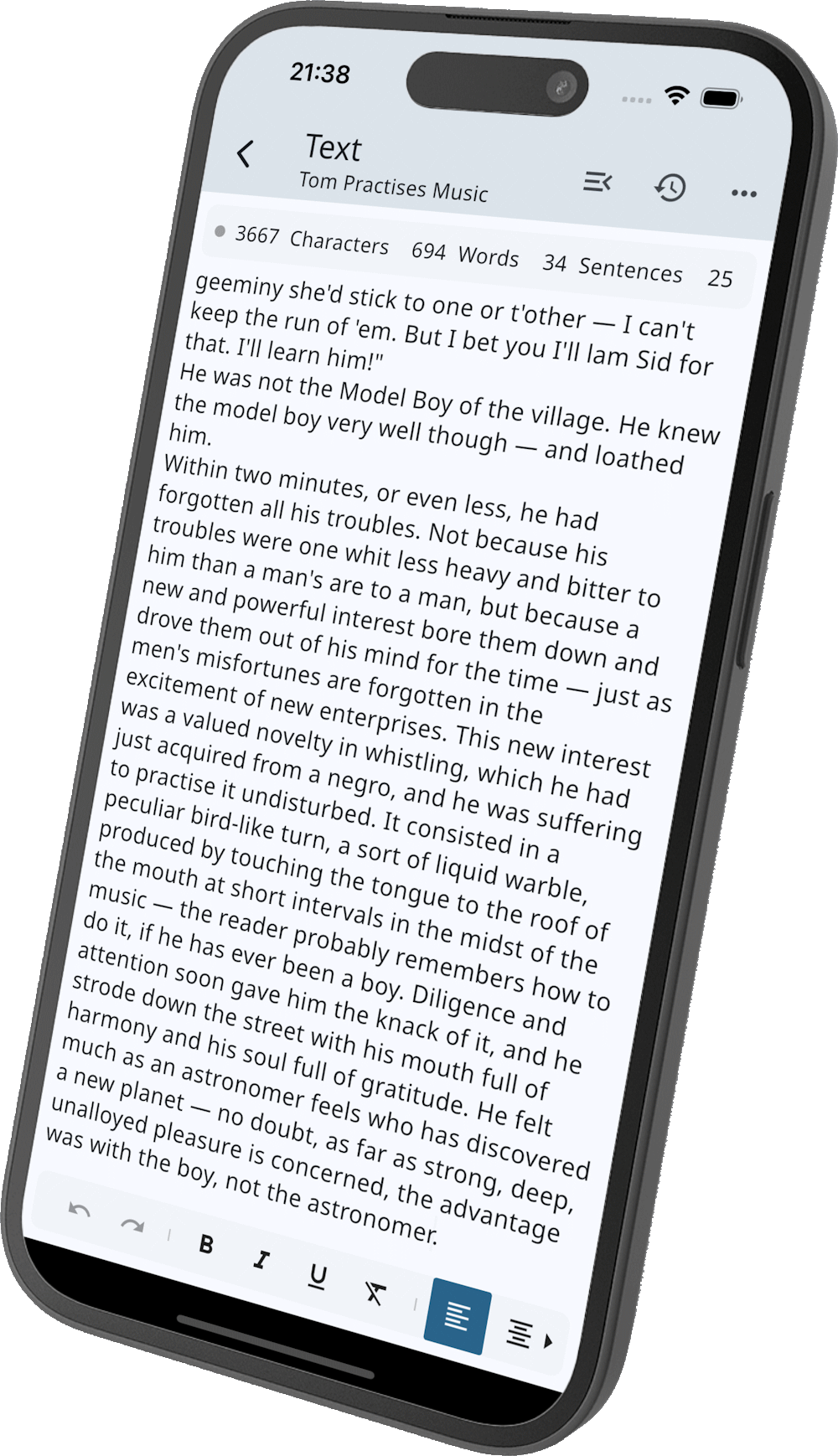
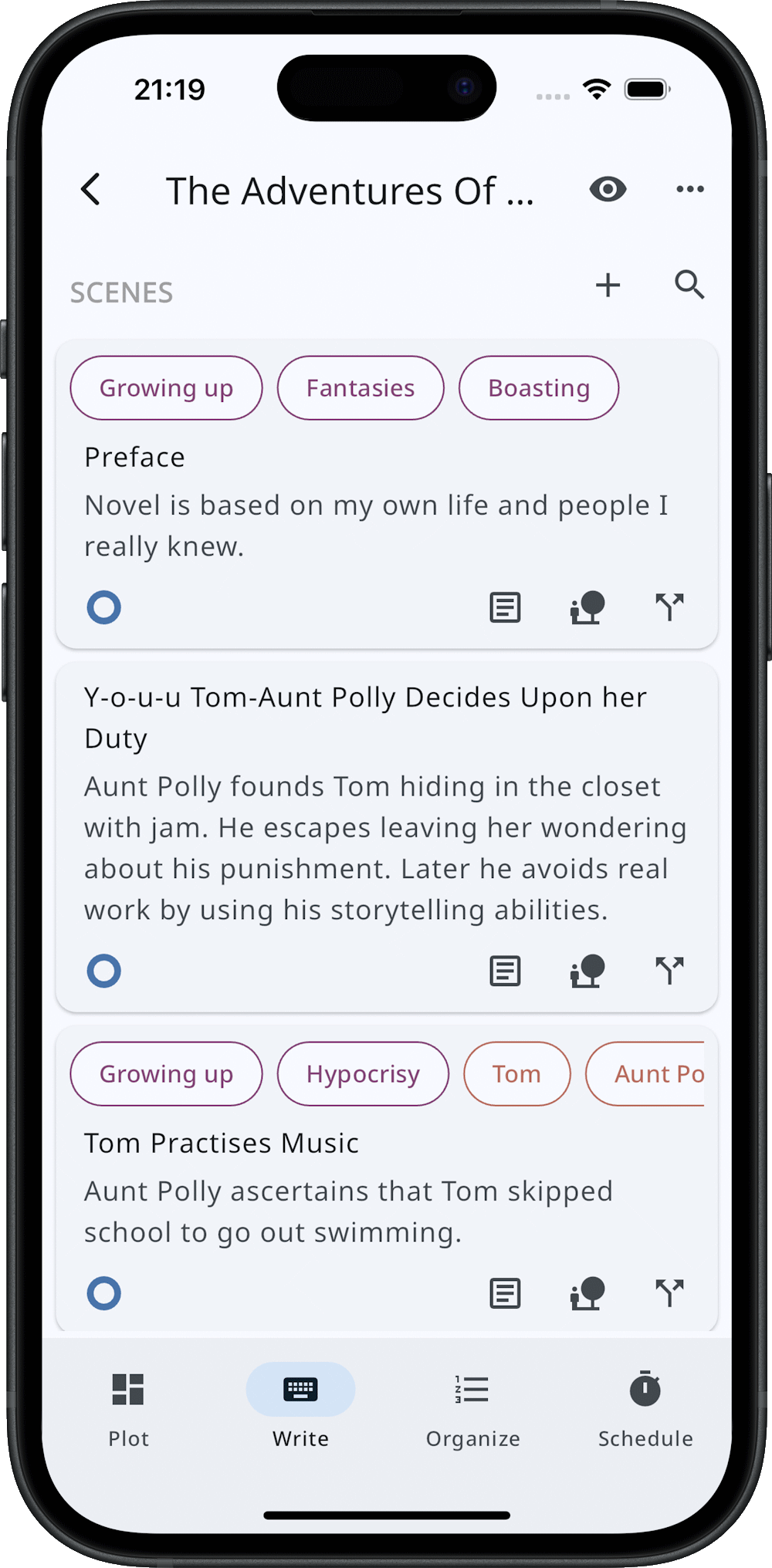
Outline is when you put all the items together to compose scenes. Each scene is a piece of your story and can be annotated or written directly in our app!
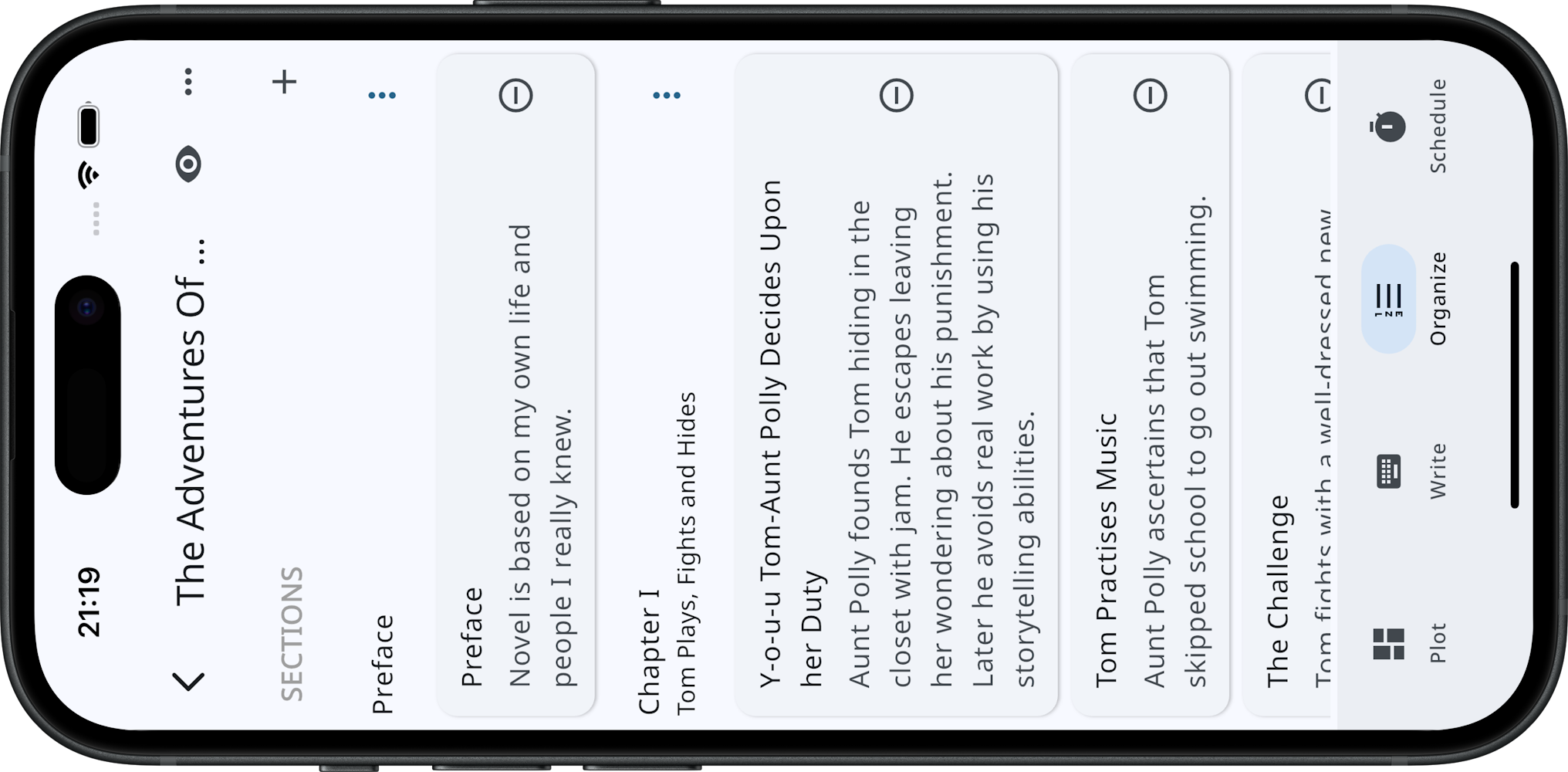
Organize
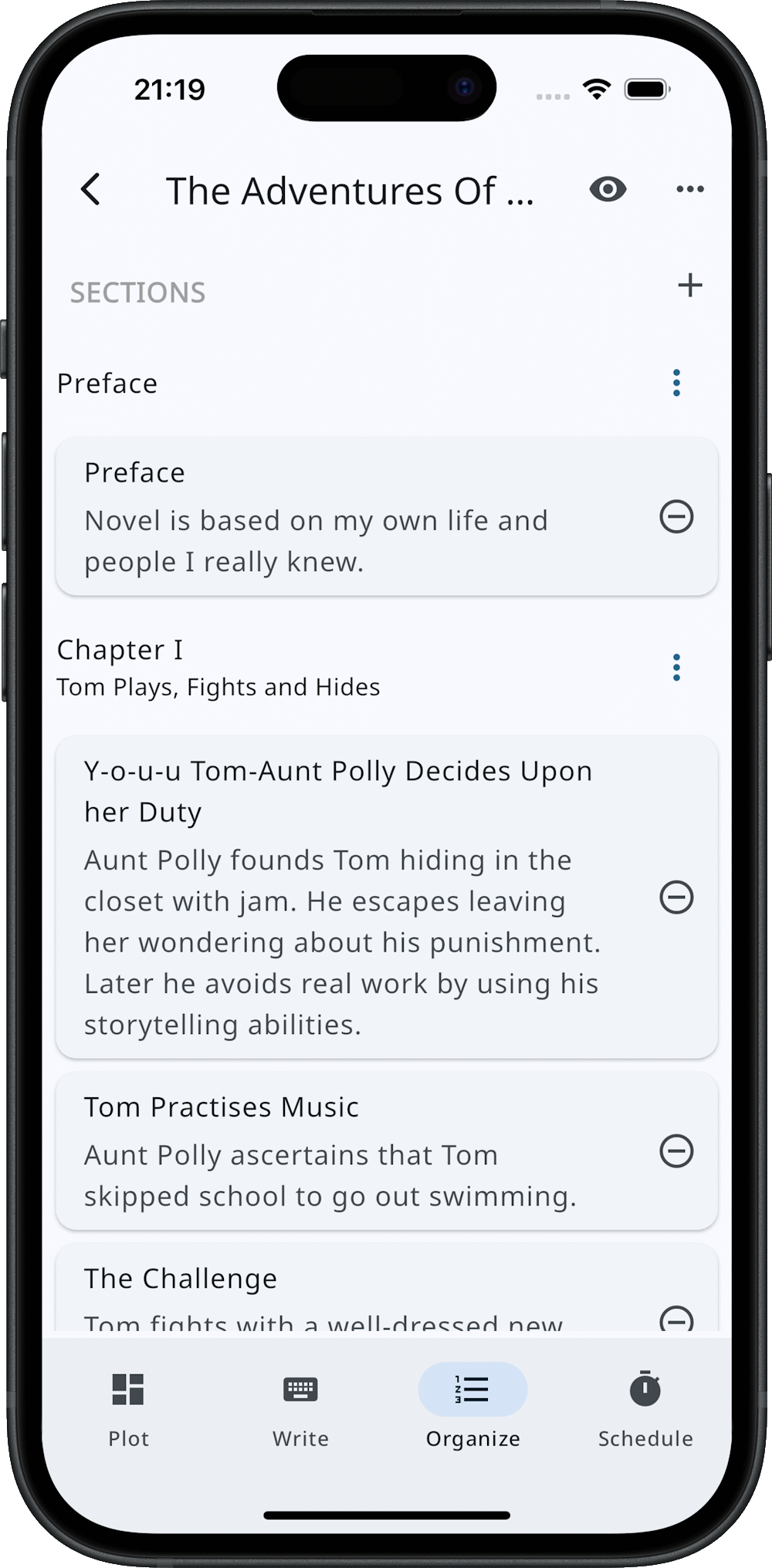
Organize is when you structure your scenes in acts, parts, chapters and so on. Your imagination is the limit.
Schedule
Schedule is when you set your goals: word count or due date.
Check out below Novelist's video from YouYube, for a brief showcase of its screens and features.
Downloads
Users
Reviews
Average Rating
Our goal is to make sure that every Novelist user can meet his needs and expectations.
You should also check out our Terms & Conditions and Privacy Policy.
Some reviews of our application found online. Here's what they say about us...
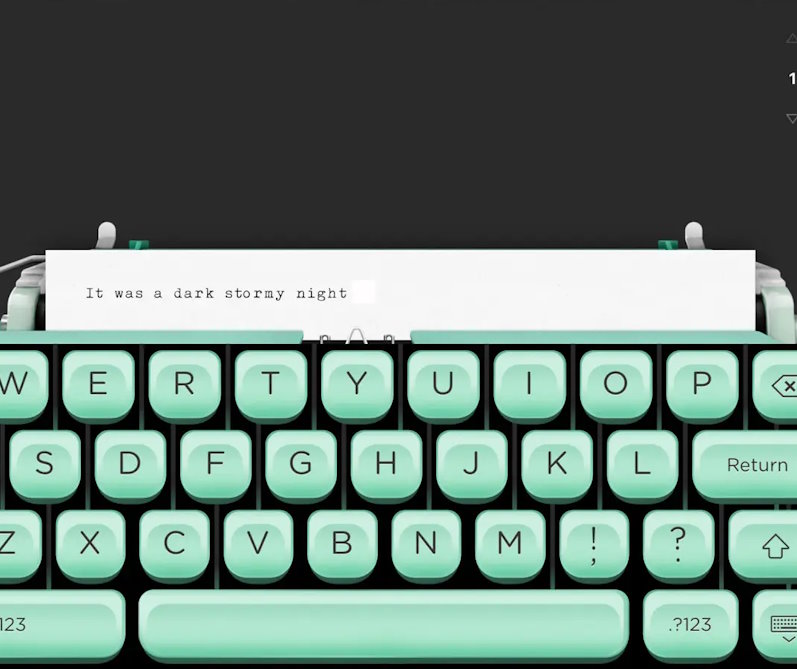
“Check your app store for software like Novelist which has a text editor function and templates for organizing…”
Read More
“Novelist has every tool you could need to plan and write every detail of your book from scratch.”
Read More
“If you own an Android device and are looking for a way to develop an idea, this app is definitely worth a look.”
Read More
“When I found this app it looked great but was still immature, but now I must say it has become my favorite.”
Read MoreUse the contacts provided to send us your message, feedback, feature request, or anything else.
Copyright © Novelist by Return True